Western Qing Tombs
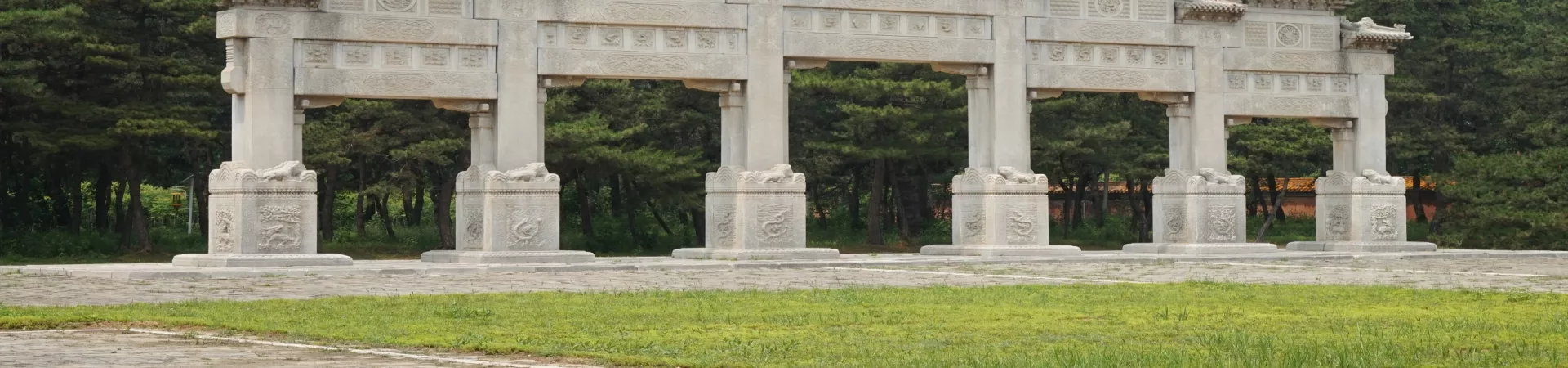
Exploring the Majesty of Qingxi Mausoleum in Baoding
Introduction:
Nestled amidst rolling hills, Qingxi Mausoleum stands as a picturesque haven surrounded by towering peaks, lush forests, and the meandering Yi River. Located approximately 15 kilometers west of Yixian County in Hebei Province, this historic site offers a serene retreat just over 120 kilometers from Beijing. Covering an expansive area of around 800 square kilometers, Qingxi Mausoleum is a testament to the grandeur of imperial mausoleums and a significant cultural heritage site.
Scenic Beauty:
Bordered by the verdant ranges of Yongning Mountain to the north and the winding Yi River to the south, Qingxi Mausoleum boasts a landscape of ancient trees and majestic scenery. With the ancient Yandu City ruins dating back over 2300 years to the east, the imposing Zijing Pass to the west, and the towering peaks of Yongning Mountain to the north, the site is enriched by the flowing waters of the Yi River.
Imperial Legacy:
Chosen as one of the two major imperial tombs of the Qing Dynasty, Qingxi Mausoleum's location was carefully selected in the eighth year of Emperor Yongzheng's reign (1730 AD). The tomb site initially designated at Jiu Feng Chaoyang Mountain in Qing Dongling was abandoned due to the emperor's concern about its incomplete layout and the presence of sandy soil. In search of an auspicious site, the memorialists recommended the area under Yongning Mountain in Yixian County. Emperor Yongzheng, delighted by the suggestion, acknowledged the site's auspicious features, stating it was a "gathering of Qian and Kun, the convergence of Yin and Yang, a dragon's abode with pure sand and water, possessing unparalleled beauty." Since then, successive Qing emperors have been interred in the two major tombs located in Zunhua and Yixian.
Cultural Heritage:
Recognized as a key national cultural heritage site, Qingxi Mausoleum, along with Qing Dongling, was inscribed on the World Heritage List during the 24th session of the World Heritage Committee in November 2000. This acknowledgment highlights the historical and architectural significance of these imperial tombs, showcasing the meticulous planning and aesthetic considerations that went into their creation.
Practical Information:
- Contact: 0312-4710016; 0312-8263059
- Duration: Plan for a minimum of three hours or more to fully appreciate the historical and natural wonders.
Ticket Information:
- Peak Season Ticket: ¥108 (April 1 - October 31, Monday to Sunday)
Note: Ticket prices are for reference only; please refer to official announcements for the most accurate and up-to-date information.
Opening Hours:
- April 1 - October 31: 08:00 - 17:30 (Monday to Sunday); last entry at 17:00
- November 1 - March 31: 08:30 - 17:00 (Monday to Sunday); last entry at 16:30
Embark on a journey through time and culture at Qingxi Mausoleum, where the harmonious blend of nature and imperial legacy creates an unforgettable experience. This monumental site, steeped in history and nestled in the embrace of the Hebei landscape, stands as a testament to China's rich cultural heritage.