Jixing Cave Scenic Resort
Subtitle: A Journey into the Subterranean Wonderland of Baise, Guangxi
1. Introduction: The Allure of the Underground Nestled within the dramatic karst landscapes of Baise City in the Guangxi Zhuang Autonomous Region, Jixing Cave (吉星岩) stands as a monumental testament to nature's artistic prowess and geological patience. Far more than a simple cavern, it is a vast, intricate underground palace, a symphony of stone sculpted over millions of years by the persistent drip of water and the slow dance of mineral deposition. For travelers venturing to this less-trodden part of China, Jixing Yan offers an unforgettable immersion into a world of surreal beauty, where imagination is sparked at every turn by fantastical formations that defy belief. This destination is not merely a sightseeing stop but a profound experience of Earth's hidden history and aesthetic grandeur.
2. Geological Marvel and Historical Context 2.1. The Karst Canvas The cave is a premier example of a mature karst formation. Karst topography, characterized by soluble bedrock like limestone, is prevalent across Southwest China, creating the region's iconic pinnacles and caverns. Jixing Cave represents the subterranean heart of this process. Over eons, slightly acidic rainwater percolated through fissures in the limestone, slowly dissolving the rock and enlarging the spaces into the colossal chambers and winding passages seen today.
2.2. A Timeline Written in Stone The cave's interior is a dynamic geological archive. Every stalactite hanging from the ceiling, every stalagmite rising from the floor, and every flowing stone drapery records a history of climatic changes and mineral-rich water flows. These formations grow at an almost imperceptible pace—sometimes just a few centimeters every century. The sheer scale and complexity of the formations within Jixing Cave suggest a history spanning several million years, making a walk through its galleries a journey back through deep time.
3. Exploring the Chamber of Wonders: Key Features and Attractions 3.1. The Grand Hall and Initial Impressions The entrance to Jixing Cave often opens into a vast, cathedral-like space that immediately instills a sense of awe. Strategically placed lighting, designed to minimize environmental impact while highlighting natural features, reveals the sheer scale of the cavern. The air is cool and carries a distinct, earthy freshness. The first glimpse of massive, shimmering columns connecting floor to ceiling sets the tone for the wonders that lie ahead.
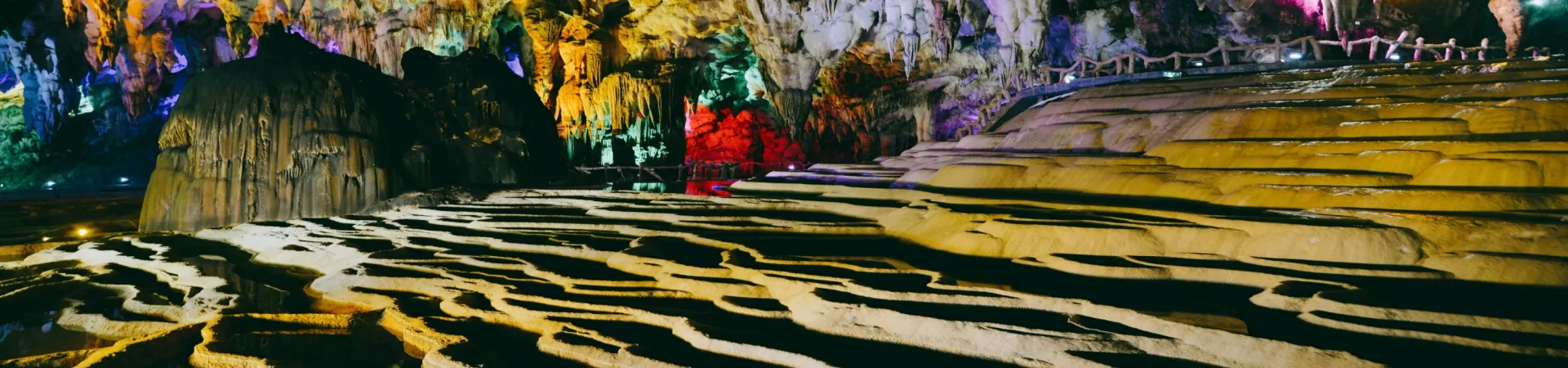
3.2. The Symphony of Formations The cave's beauty lies in the incredible diversity of its speleothems (cave formations). Visitors will encounter: * Stalactites and Stalagmites: From delicate, needle-like soda straws to robust, towering pillars that resemble ancient trees or mythical guardians. Some have met to form complete columns, symbolizing an eternal union. * Flowstones and Draperies: These create some of the cave's most breathtaking scenery. Ribbon-like draperies, often translucent and resembling frozen waterfalls or elegant curtains, adorn the walls. Flowstones cascade over terraces, creating petrified basins that look like cascading rice paddies or silken robes. * Helictites and Exotic Forms: The true marvels are the whimsical, defying-gravity formations like helictites. These twisted, spiraling, or hook-shaped growths extend in all directions, seemingly ignoring the pull of gravity, showcasing the mysterious capillary forces at work within the rock. * The Stone Waterfall and Jade Pool: One of the undisputed highlights is a monumental flowstone formation that mimics a colossal, frozen waterfall, its surface rippled and gleaming under the lights. Nearby, crystal-clear, still pools perfectly reflect the ceiling's wonders, doubling the visual spectacle and creating scenes of serene symmetry.
3.3. Thematic Zones and Cultural Interpretation The cave tour is often organized into thematic zones, each with a name that sparks the imagination, such as the "Hall of Abundance," "Jade Forest," or "Palace of the Dragon King." These names are inspired by the shapes of the formations, which locals have interpreted as resembling animals, deities, plants, and mythological scenes. This cultural layer adds a narrative to the geological spectacle, inviting visitors to play a game of recognition and storytelling.
4. Practical Information for Visitors 4.1. Location and Accessibility Jixing Cave is located in the Tianyang County area of Baise City. Baise itself is well-connected by rail and highway. The final leg of the journey to the cave site typically involves road travel from Baise's urban center or from nearby towns. The site is developed for tourism, with paved walkways, staircases, and handrails installed throughout the main tour route to ensure safe and accessible exploration, though comfortable, non-slip walking shoes are absolutely essential.
4.2. Opening Hours and Contact Details The cave is open to the public year-round. The standard operating hours are from 9:00 AM to 5:00 PM daily. The last admission or ticket sale usually occurs at 4:30 PM, so it is highly advisable to arrive well before this cutoff to allow ample time for the full tour. For the most current information, especially during public holidays or in case of unforeseen circumstances, prospective visitors can contact the site directly at 0776-3821998.
4.3. Tips for an Optimal Experience * Climate and Clothing: The temperature inside the cave remains a constant cool year-round, typically between 16-20°C (60-68°F), with high humidity. Bringing a light jacket or long sleeves is recommended, even on a hot day outside. * Photography: The low-light environment presents a challenge. While photography is permitted, the use of a tripod may be restricted in crowded areas. High-sensitivity camera settings or smartphones with good low-light performance are useful. Respect any signage prohibiting flash photography, as it can disturb other visitors and is often unnecessary with the strategic lighting. * Conservation Ethic: As a fragile ecosystem, it is crucial to follow the principle of "take only photographs, leave only footprints." Touching the formations is strictly prohibited, as the oils from human skin can halt their growth and cause discoloration. * Guided Tours: Opting for a guided tour, if available, can greatly enhance the visit. Knowledgeable guides provide invaluable insights into the geology, history, and folklore of the cave, pointing out details and formations a casual observer might miss.