Baise Uprising Memorial Park
A Journey Through Revolutionary History: The Baise Uprising Memorial Hall
Introduction: A Monument to Courage and Liberation Nestled against the verdant slopes of Yingshan (Welcoming Dragon Mountain) on the northeastern outskirts of Baise City in the Guangxi Zhuang Autonomous Region, stands the solemn and imposing Baise Uprising Memorial Hall. Constructed on the eve of the 70th anniversary of the historic uprising in 1999, the museum serves as a profound tribute to a pivotal chapter in China's revolutionary narrative. Its very name, inscribed in flowing, gilded characters at the entrance by then-President Jiang Zemin, signifies its national importance. More than just a repository of artifacts, the memorial hall is an architectural symbol and an immersive chronicle of the bravery, strategic brilliance, and revolutionary fervor that defined the Baise Uprising, an event that dramatically altered the revolutionary landscape in southern China.
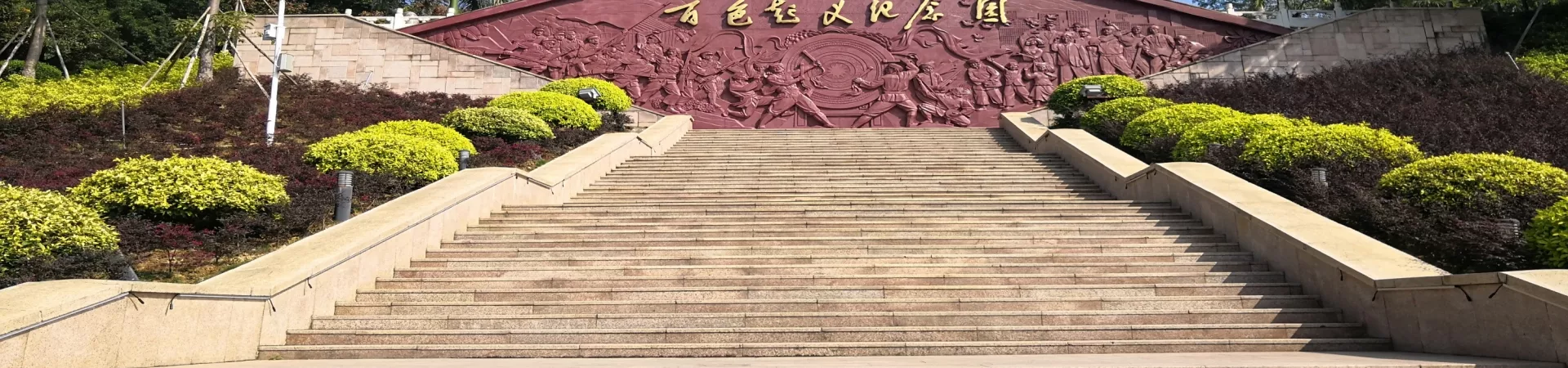
Architectural Grandeur and Symbolic Design The museum's architecture immediately communicates strength and resilience. The main entrance is supported by four massive, sturdy columns that hold aloft a crown-shaped corridor. This design is deeply symbolic, representing the indomitable spirit of the Baise people—their role as an unshakable pillar (Dizhongliu) supporting the revolutionary cause, their heroic stature that "holds up the heavens and stands firm on the earth," and their awe-inspiring, mountain-moving determination. Flanking the grand entrance are two monumental stone relief sculptures, each measuring 7.3 meters in height and 8.9 meters in width. These intricate carvings are not merely decorative; they vividly and dynamically bring to life the dual engines of the revolution: the "Agrarian Revolutionary Struggle," depicting the mobilization and empowerment of the peasantry, and the "Armed Struggle," showcasing the valor and intensity of the military conflict. Together, they set a powerful visual tone for the historical exploration within.
The Historical Crucible: The Baise Uprising of 1929 At the heart of the memorial hall's narrative is the event it commemorates: the Baise Armed Uprising, which erupted on December 11, 1929. This was not a spontaneous revolt but a meticulously planned and boldly executed military operation led by a cadre of brilliant revolutionary figures. The leadership included Deng Xiaoping (then known as Deng Xixian), Zhang Yunyi, Chen Haoren, Li Mingrui, Wei Baqun, and Lei Jingtian. Operating in the challenging terrain of Guangxi, they successfully unified local peasant forces, sympathetic units of the Guangxi army, and revolutionary workers to strike a decisive blow.
The uprising's primary objective was to challenge and cripple the powerful Guangxi clique of the Kuomintang (Nationalist) warlords, whose dominance over the region was oppressive. The success of the Baise Uprising sent shockwaves through the ruling authorities, significantly weakening the warlords' "arrogant momentum" in southern China. It led to the establishment of the Youjiang Revolutionary Base Area and the founding of the Seventh Army of the Chinese Workers' and Peasants' Red Army, creating a crucial revolutionary stronghold. This victory proved that revolutionary forces could thrive even in remote, mountainous regions, providing invaluable experience and morale for the broader Communist revolutionary movement. Consequently, the Baise Uprising earned its illustrious place as a "glorious page" in the annals of the Chinese revolution.
Immersive Exhibitions and Artifacts Inside, the memorial hall utilizes a modern museological approach to guide visitors through this turbulent era. The exhibitions are organized thematically and chronologically across multiple floors, featuring a rich collection of historical photographs, detailed documents, personal letters, military maps, and poignant personal effects belonging to the leaders and soldiers. Dioramas and life-sized scenes recreate critical moments, from strategic planning sessions in humble villages to the fervor of the uprising itself. Multimedia presentations and interactive displays offer deeper context, explaining the socio-political conditions of the time, the strategies employed, and the uprising's far-reaching consequences. The focus extends beyond military history to encompass the social revolution, highlighting land reform policies and the mobilization of the Zhuang and other ethnic minorities in the region, who played an integral role in the struggle.
Visitor Information and Practical Details Location and Access: The Baise Uprising Memorial Hall is situated in the northeastern suburbs of Baise City. The city itself is well-connected by a network of eight public bus lines, with stops covering most urban areas, making access to the city center straightforward. From downtown, visitors can easily reach the memorial hall by taking a taxi. Taxi fares are affordable, with a starting meter price varying by vehicle type: approximately 3 RMB for Xiali models, 4 RMB for models like Qianlima, and 5 RMB for Jetta or similar standard sedans.
Admission and Operating Hours: Admission to the memorial hall is free of charge. This policy is in place throughout the year, from January 1st to December 31st, including all days of the week from Monday to Sunday. It is always advisable to confirm the latest details directly with the scenic area for any unforeseen changes. The memorial hall is open to the public daily from 9:00 in the morning until 17:00 in the afternoon. The last entry is typically one hour before closing. Visitors should plan for a comprehensive visit to last between one to three hours to fully appreciate all exhibits and the site's atmosphere.
Contact Information: For further inquiries, prospective visitors can contact the memorial hall directly at: 0776-2833177.