Youli City Scenic Area
Subtitle: A Journey Through Millennia: Exploring the Ancient Origins of the I Ching at Youli City
Introduction: The Cradle of a Philosophical Classic Nestled in present-day Anyang, Henan Province, lies Youli City (羑里城), a site of profound historical and cultural significance that transcends its modest physical remains. This is not merely an archaeological park; it is the legendary birthplace of one of China's most influential texts, the I Ching (Book of Changes), and bears the somber distinction of being the first state prison documented in Chinese history. For any visitor interested in the origins of Chinese philosophy, the interplay of history and myth, and the tangible echoes of ancient dynasties, Youli City offers a uniquely compelling destination. Its narrative begins over 3,000 years ago during the turbulent final years of the Shang Dynasty, where a political imprisonment would inadvertently give rise to a cornerstone of Chinese thought.
1. Historical Significance: Prison of a King, Crucible of a Classic 1.1. The Legend of King Wen's Confinement The central legend of Youli City dates to around 1100 BCE. King Zhou of Shang, the infamous last ruler of the dynasty known for his tyranny, perceived a threat in the virtuous Ji Chang, the Lord of the Zhou state (posthumously titled King Wen of Zhou). Fearing his influence, King Zhou had Ji Chang imprisoned at Youli. Historical records suggest this confinement lasted for seven years. It was during this prolonged period of captivity, under the shadow of adversity, that Ji Chang is said to have pondered the mysteries of the universe, building upon earlier divinatory traditions.
1.2. "Confined at Youli, He Elaborated the Zhou Changes" This period of forced isolation is immortalized in the famous phrase "文王拘而演周易" ("King Wen was confined at Youli and elaborated the Zhou Changes"). Tradition holds that here, Ji Chang structured the 64 hexagrams—the core symbolic system of the I Ching—and composed the judgments attached to them. He transformed and systematized what was likely a simpler divination manual into a profound philosophical work encompassing cosmology, ethics, and statecraft. Thus, Youli City evolved from a place of political suppression into a sacred sanctuary of intellectual and spiritual creation, where the I Ching took its classical form.
2. Archaeological and Cultural Layers 2.1. A Stratified Historical Record The site's importance is validated by more than legend. Archaeological excavations reveal a 7-meter-thick cultural layer containing relics from the Longshan Culture (c. 3000–1900 BCE), demonstrating human activity long before the Shang era. Above this lie rich deposits from the Shang and Zhou dynasties, providing material evidence of the site's occupation during the very period of King Wen's alleged imprisonment. This stratification makes Youli City a valuable book of earth, its pages holding stories from Neolithic times through to the dawn of the Zhou Dynasty.
2.2. Key Monuments and Relics Today, visitors can explore several restored sites and monuments that evoke this deep history: * The Yan Yi Fang (演易坊) and Yan Yi Tai (演易台): The "Platform for Elaborating the Changes" is the heart of the site. This structure marks the supposed location where King Wen, confined but undefeated in spirit, contemplated and developed the hexagrams. While the current platform is a later reconstruction, it serves as a powerful focal point for reflection on his ordeal and achievement. * Ancient Temple Foundations: Remnants of palace or temple bases hint at the site's architectural scale and importance during the Shang-Zhou transition. * Historic Stelae: The site houses several significant stone inscriptions, including the Yu Bei (禹碑, a stele traditionally associated with the Great Yu, though likely a later tribute) and inscriptions related to the Wen Wang Yi (文王易, or "King Wen's Changes"). These tangible artifacts connect the visitor directly to centuries of scholarly veneration for the I Ching and its legendary author.
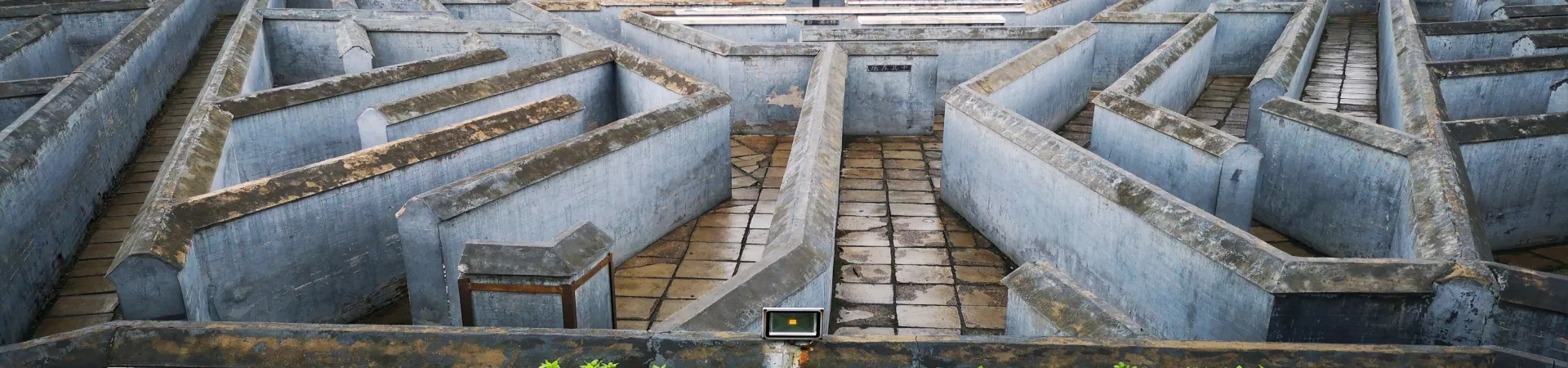
3. The Enigmatic Eight-Trigrams Maze (八卦迷阵) 3.1. A Tangible Link to Military Legend One of the most interactive and intriguing features of Youli City is the large-scale Eight-Trigrams Maze constructed on the grounds. This maze is not a historical relic from the Shang era but a physical representation of the later application of I Ching principles. It is popularly associated with the military strategist Zhuge Liang (181–234 CE) of the Three Kingdoms period, who was renowned for employing complex battle formations based on the eight trigrams.
3.2. Navigating the Symbolic Array The maze is designed according to the Bagua (Eight Trigrams) diagram, with pathways forming eight distinct tactical formations or "battle arrays." These arrays bear evocative names like "Shi Mian Mai Fu" (十面埋伏, Ambush on All Sides) and "Wo Long" (卧龙, Crouching Dragon—also Zhuge Liang's sobriquet). Entering the maze allows visitors to physically engage with the abstract concepts of the I Ching. The experience of navigating its confusing, winding paths offers a lighthearted yet insightful glimpse into the strategic and philosophical wisdom attributed to ancient masters like Zhuge Liang, demonstrating how the symbolic language of the I Ching was applied beyond philosophy into realms like warfare and psychology.
4. Practical Visitor Information 4.1. Admission and Operating Hours * Ticket Prices: Adult tickets are priced at 38 RMB. Discounted student tickets are available for 19 RMB upon presentation of a valid student ID. * Opening Hours: The site operates year-round. Hours vary seasonally: from 08:10 to 18:00 during the summer months, and from 08:10 to 17:30 during the winter months. It is advisable to allocate 1 to 3 hours for a comprehensive visit, allowing time to explore the historical sites, contemplate at the platforms, and experience the Eight-Trigrams Maze.
4.2. Location and Contact Youli City is located in Tangyin County, under the administration of Anyang City. For the most current information, especially regarding any temporary changes in schedule, visitors can contact the site at 0372-6231399.
A visit to Youli City is ultimately a walk through layered time. It is an encounter with the very real archaeology of China's earliest dynasties, a pilgrimage to the legendary source of a timeless book of wisdom, and an active participation in the enduring cultural legacy that sprang from one man's resilience. It stands as a testament to how profound thought can emerge from hardship, forever linking this quiet corner of Anyang to the intellectual foundations of Chinese civilization.