Wang Xiangyan
Subtitle: A Journey Through Time and Nature in the Heart of China's Taihang Mountains
1. Introduction to Wangxiangyan Nestled within the awe-inspiring embrace of the Taihang Mountains in Linzhou, Anyang City, Henan Province, Wangxiangyan is far more than a scenic spot. It is a profound synthesis of geological wonder, historical narrative, and spiritual sanctuary. The name itself, translating to "Prime Minister's Rock," hints at its deep connection to Chinese history and legend. This destination offers visitors a multifaceted experience, challenging the body with its dramatic cliffs and vertiginous ascents while captivating the mind with tales of ancient sages and timeless natural artistry. It stands as a crown jewel within the broader Taihang Grand Canyon (Taihang Mountains Canyon) scenic area, representing the quintessential rugged beauty and cultural depth of northern China's landscape.
2. The Legend and Historical Significance 2.1. The Story Behind the Name The origin of the name "Wangxiangyan" is steeped in the lore of the Shang Dynasty (c. 1600–1046 BCE). It is said that the revered statesman and sage Fu Yue lived in seclusion and cultivated his virtues in a cave within these very cliffs before being discovered and appointed as prime minister by the wise King Wuding of Shang. The character "Xiang" (相) means "prime minister," and "Wang" (王) refers to the king, commemorating this legendary encounter between ruler and worthy advisor. This story has imbued the location with an aura of wisdom, potential, and the harmonious ideal of a virtuous ruler seeking out talented individuals for the good of the state.
2.2. A Site of Continuous Reverence This historical association was solidified centuries later during the Ming Dynasty. A local county magistrate, inspired by the legend, officially named the area "Wangxiangyan." Subsequently, temples and pavilions were erected on the mountain to honor Fu Yue, transforming it into a site of cultural pilgrimage. For generations, scholars, officials, and commoners have visited, not only to admire the scenery but also to pay homage to the ideals of integrity, self-cultivation, and service that Fu Yue represents.
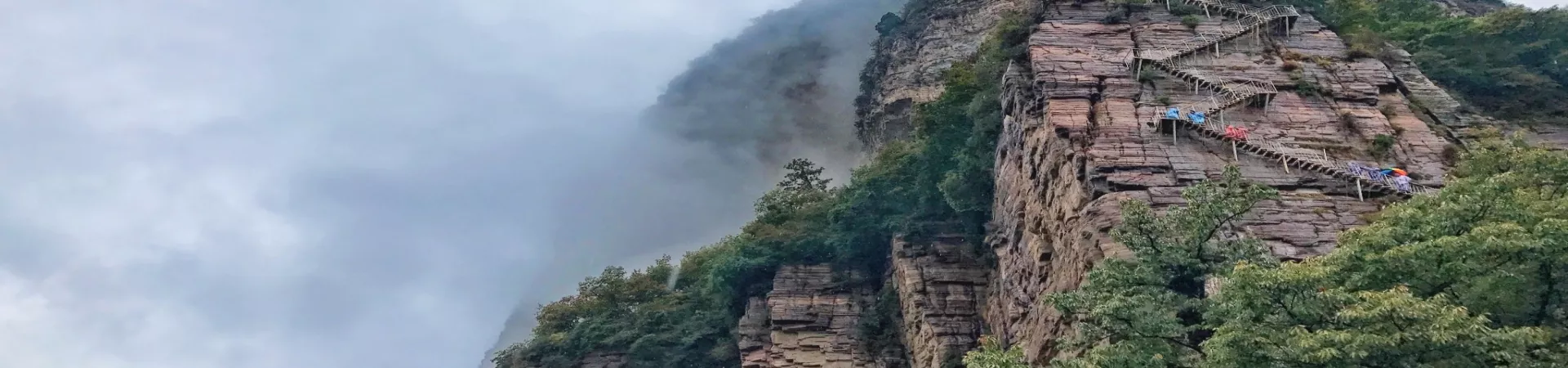
3. The Natural Landscape and Key Attractions 3.1. Geological Marvel: The Sheer Red Cliff The most dominant and breathtaking feature of Wangxiangyan is its colossal, near-vertical cliff face. Composed of striking reddish sandstone, this monumental wall of rock soars hundreds of meters into the sky, presenting a majestic and formidable sight. It serves as a stunning natural backdrop and the central axis around which the entire hiking experience is orchestrated. The play of light and shadow on its textured surface at different times of day creates a constantly changing visual spectacle.
3.2. The Ascent: A Test of Courage and Reward The journey to the summit is an adventure in itself, featuring a series of ingeniously engineered and thrilling pathways: * The Spiral Ladder (Moxuan Tidao): An iconic and adrenaline-inducing feat, this is a narrow, open metal staircase spiraling tightly up the vertical face of the cliff. Ascending its 30-plus meters offers heart-pounding views straight down and a profound sense of accomplishment. * The Hanging Walkway (Xuankong Zhandao): Bolted directly onto the side of the sheer precipice, this wooden-plank walkway allows visitors to traverse the cliff face. Walking this path, with the rock on one side and open air on the other, provides unparalleled, panoramic vistas of the deep valley below and the surrounding mountain peaks. * The Modao Ladder: Another steep, historic stone staircase carved into the mountain, offering a more traditional but no less demanding climbing experience through narrow passages and past ancient caves.
3.3. Cultural and Scenic Points of Interest * Fu Yue's Cave (Fuyue Dong): The legendary cave where Fu Yue is said to have lived in seclusion. It is a quiet, contemplative spot that connects visitors directly to the ancient story. * Forest of Steles (Beilin): A collection of stone tablets inscribed with poems and calligraphy from various dynasties, left by inspired visitors who sought to capture the beauty and significance of the place in art. * The Barrel Ridge (Tongbi): A narrow, spine-like ridge connecting two parts of the mountain, offering thrilling walks and spectacular photo opportunities. * Seasonal Beauty: The area transforms with the seasons: vibrant green foliage and cascading waterfalls in spring and summer; a painter's palette of red, orange, and yellow leaves in autumn; and a serene, snow-dusted majesty in winter.
4. Practical Visitor Information 4.1. Location and Access Wangxiangyan is located in Linzhou City, under the administration of Anyang City, in northern Henan Province. It is approximately a 2 to 2.5-hour drive from downtown Anyang. The most convenient way to visit is by private vehicle or hired taxi. Alternatively, tourists can take a long-distance bus from Anyang to Linzhou, and then transfer to a local bus or taxi for the final leg to the Taihang Grand Canyon scenic area entrance.
4.2. Tickets and Contact Details * Admission Fee: The entrance ticket for Wangxiangyan is approximately 160 Chinese Yuan (CNY). It is often included as part of a combined ticket for the larger Taihang Grand Canyon area. Prices are subject to change, and it is advisable to verify before your visit. * Contact Number: For the latest information on opening hours, weather conditions, or ticket inquiries, visitors can contact the scenic area at 0372-6082888.
4.3. Tips for an Optimal Visit * Physical Preparation: The hike is strenuous and involves significant climbing. A good level of physical fitness, sturdy and comfortable hiking shoes with grip, and appropriate clothing are essential. * Safety First: Always stay on marked paths and follow all safety instructions, especially on the exposed staircases and walkways. Hold handrails securely and be mindful of weather conditions, as paths can become slippery. * Timing: Allocate at least 3-4 hours for a thorough visit. Arriving early in the day helps avoid larger crowds and allows for a more relaxed experience. * Acrophobia Consideration: The attraction features extreme heights and exposed pathways. Individuals with a severe fear of heights should carefully assess their comfort level. * Amenities: Basic amenities such as restrooms, small shops selling water and snacks, and resting areas are available at the base and at some points along the route. It is recommended to carry water and some energy snacks.