Anyang Wenfeng Pagoda
Subtitle: A Millennium-Old Architectural Marvel Defying Earthquakes and Convention
1. Introduction to the Wenfeng Pagoda
Nestled in the ancient city of Anyang, Henan Province, the Wenfeng Pagoda, also historically known as the Tianning Temple Pagoda, stands not merely as a structure of brick and wood but as a profound testament to time, resilience, and unique artistic vision. For over a thousand years, since its initial construction in 952 AD during the Later Zhou dynasty, this pagoda has been the defining architectural symbol of Anyang. Its fame, however, extends far beyond its age or its role as a city emblem. The Wenfeng Pagoda captivates historians, architects, and travelers alike primarily for one extraordinary reason: it is built upside-down. This singular architectural anomaly, where the pagoda widens as it rises, presents a silhouette unlike any other in China, making it a peerless masterpiece in the nation's rich tapestry of ancient towers.
2. Architectural Uniqueness and Design
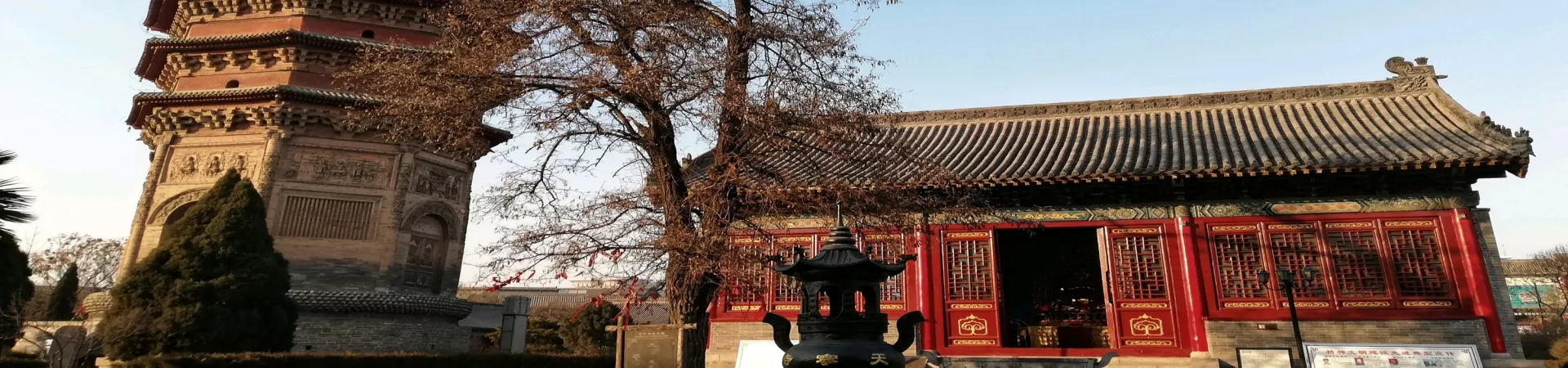
2.1 The Defiant Silhouette: An "Upside-Down" Pagoda The most striking and celebrated feature of the Wenfeng Pagoda is its inverted, umbrella-like form. Defying the foundational principles of most traditional pagoda construction—which typically taper towards the top for stability—the Wenfeng Pagoda does the opposite. Its base is relatively slender, and each of its five stories progressively expands in diameter as it ascends. This "large on top, small on bottom" (上大下小) configuration is a unique architectural experiment in Chinese history, creating a visually dramatic and seemingly gravity-defying profile. This bold design choice remains an enigma, sparking endless curiosity about the builders' intentions, whether driven by religious symbolism, aesthetic daring, or advanced structural understanding.
2.2 Structural Composition and Artistic Adornment Constructed as a brick-and-wood hybrid structure, the pagoda's octagonal body serves as a magnificent canvas for exquisite brick carvings. Each of the eight sides on every story is adorned with intricate, vivid reliefs that are far more than mere decoration. These sculptures form a visual scripture, depicting a panorama of Buddhist stories, deities, and sacred motifs with remarkable artistry and narrative detail. The lifelike figures and scenes offer a silent, stone-bound sermon, allowing visitors to "read" Buddhist teachings through art. This combination of unconventional form and meticulous surface artistry makes the pagoda a three-dimensional repository of both architectural innovation and religious art.
3. The Visitor Experience: Ascent and Vista
3.1 The Climb to the Summit The experience of the Wenfeng Pagoda is immersive and rewarding. Visitors can embark on an interior ascent via a staircase of 72 steps. The climb through the pagoda's core is a journey through layers of history, culminating at the topmost platform. Here, one is greeted with a breathtaking panoramic view of the ancient capital of Anyang, a city steeped in history as one of the cradles of Chinese civilization. The vista connects the ancient with the modern, offering a tangible sense of place and history.
3.2 The Crown Jewel: The Ornate Finial From this vantage point, attention is inevitably drawn upward to the pagoda's magnificent finial, or tashti. This crowning element is itself a masterpiece—a rare, exquisitely crafted vase-shaped spire that soars approximately 10 meters high. The elegant, bulbous form of the finial, resembling a precious ritual vessel, adds a final note of grace and spiritual symbolism to the pagoda's extraordinary silhouette, perfectly complementing its unique form against the sky.
4. A Testament to Resilience and Practical Information
4.1 The Mystery of Seismic Survival The legend of the Wenfeng Pagoda is deepened not just by its form but by its formidable endurance. Historical records indicate that the Anyang region has weathered at least two major earthquakes, each exceeding magnitude 7.0. In the face of such catastrophic forces that have toppled countless structures, the seemingly top-heavy, inverted Wenfeng Pagoda has stood unyielding. This miraculous survival has imbued the pagoda with an aura of mystery and reverence. It poses a fascinating puzzle for engineers and seismologists, suggesting that its unique dynamic structure and ancient construction techniques may harbor forgotten wisdom of earthquake resistance, adding a layer of scientific intrigue to its historical and artistic significance.
4.2 Planning Your Visit For the traveler seeking to witness this marvel firsthand, the Wenfeng Pagoda is accessible and visitor-friendly. * Location: It is a central landmark in Anyang city. * Transportation: Visitors can conveniently reach the site by taking public bus routes 18, 21, or 25 and alighting at the dedicated Wenfeng Pagoda station. * Admission & Hours: The pagoda is open to the public daily from 8:30 AM to 5:30 PM throughout the year. An admission fee is required for entry. * Suggested Duration: A visit typically takes between one to three hours, allowing sufficient time to appreciate the exterior details, ascend the pagoda, enjoy the views, and contemplate its history.
A journey to the Wenfeng Pagoda is more than a simple sightseeing stop; it is an encounter with a structure that challenges convention, showcases sublime artistry, and embodies a silent, steadfast defiance of the ravages of time and nature. It remains an indispensable and awe-inspiring chapter in the story of Anyang.