Sanzu Zen Temple
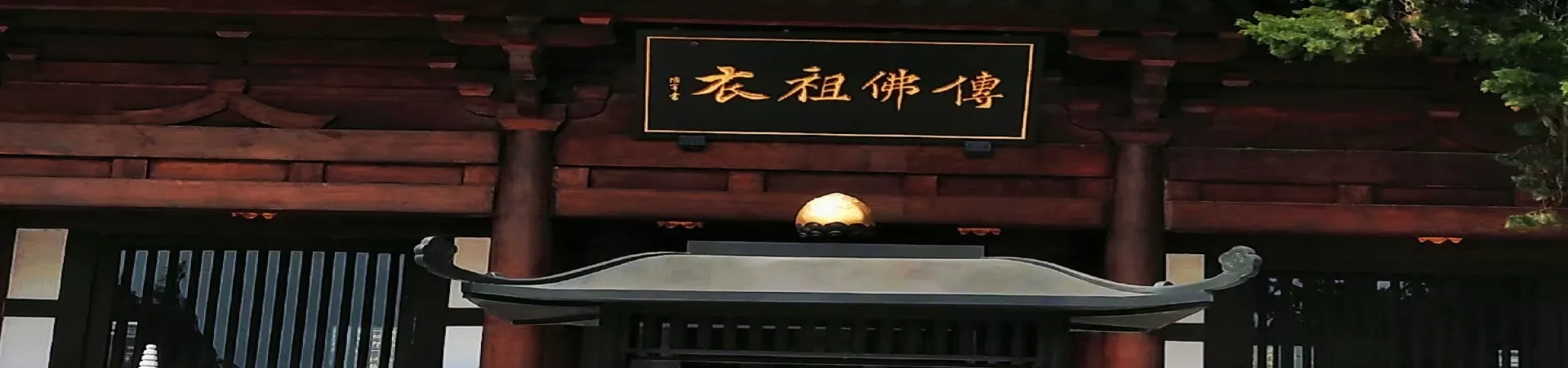
A Pilgrimage to Sanzu Temple: Where Zen History Meets Majestic Mountain Scenery
Nestled against the southeastern foothills of the vast Dabie Mountains, in the embrace of the Fengxing Hill valley, lies Sanzu Temple (Three Patriarchs Temple). Located approximately 9 kilometers northwest of Qianshan County in Anqing City, Anhui Province, this sacred site spans an impressive 7.04 square kilometers, offering a profound blend of spiritual heritage and natural grandeur. More than just a temple, it is a living chronicle of Chinese Zen Buddhism, etched into the landscape and celebrated by poets through the ages.
The Historical Legacy: From Valley Temple to Zen Sanctuary
The temple's origins trace back to the Liang Dynasty during the reign of Emperor Wu, a period fervent in its support of Buddhism. Initially known as the "Valley Temple" (Shangu Si), its destiny was forever transformed when the revered Third Patriarch of Chinese Zen Buddhism, Master Sengcan, chose this serene valley as his place of practice and teaching. It is from his profound association with the site that the temple derived its present and enduring name, Sanzu Temple, cementing its status as a pivotal cradle of Zen thought.
This historical and spiritual significance attracted luminaries from China's literary and cultural golden ages. Scholars and poets such as Lin Bu, Wang Anshi, Su Dongpo, Huang Tingjian, Li Gonglin, and Lu Zai all journeyed here, finding inspiration amidst its halls and landscapes. Their verses, left behind like spiritual footprints, praise the temple's aura. One famous line captures its esteemed reputation: "Among the Zen forests, who ranks first? This place crowns the southern lands." In recognition of its immense cultural and religious value, Sanzu Temple was designated in 1982 as one of the 142 key Han Chinese Buddhist temples by China's State Council.
Planning Your Visit: Practical Information
A visit to Sanzu Temple is a journey through both space and time. To fully appreciate its tranquil courtyards, ancient halls, and the surrounding scenic beauty, visitors should allocate approximately 1 to 3 hours.
Getting to Sanzu Temple
The temple is well-connected, offering several travel options for pilgrims and tourists.
- By Train: The Hefei-Jiujiang Railway passes nearby, with the nearest major station being Tianzhu Mountain Railway Station, only 2 kilometers from Qianshan County and roughly 11 kilometers from the temple. This station provides convenient links, situated about 165 km north to Hefei and 143 km south to Jiujiang. Key train services stopping here include: 1427, 1428, 5087, 5088, K706/K707, K708/K705, and K8434/K8435.
- By Road & Public Transport: The Gukou Bus Station is conveniently located at the foot of Sanzu Hill, 9 km from Qianshan County town and 44 km from Yuexi County. The major G318 National Highway runs close by, connecting to Hefei (199 km), Huangmei County (100 km), Wuhan (375 km), and Anqing City (56 km). For those heading to the broader Tianzhu Mountain scenic area, the Tianzhu Mountain Tourist Road begins at the valley mouth, winds around Sanzu Hill, passes behind the pagoda courtyard, and continues to Foguang Temple, covering a scenic 16-kilometer route.
- Local Bus: For travel within Qianshan, the Sanzu Temple Bus Stop is served by local bus routes, primarily the Qianshan Bus No. 3.
Admission and Opening Hours
Access to this historical gem is straightforward and affordable. * Admission Fee: The entrance ticket is priced at 10 RMB per person. * Opening Hours: The temple grounds are open to visitors daily, year-round, offering flexibility for planning your spiritual excursion.