Mingtang Mountain
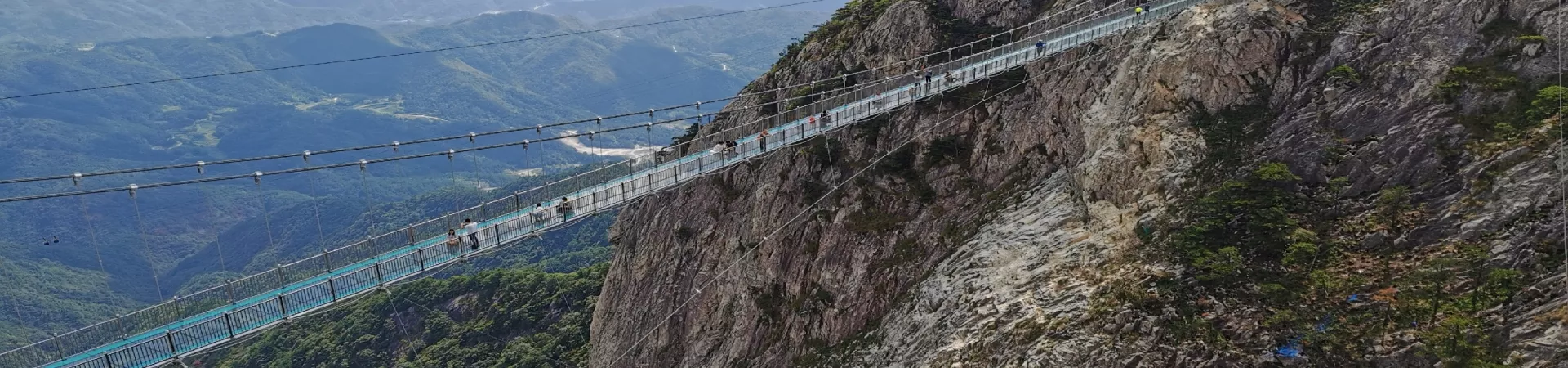
Subtitle: A Journey into the Mythical Peaks of Anhui's Hidden Gem
I. Introduction: The Sacred Mountain of the Ancient Emperors
Nestled deep within the majestic Dabie Mountain range in southwestern Anhui Province, Mingtang Mountain (明堂山) rises with an air of serene mystery. Located approximately 42 kilometers from Yuexi County, this natural masterpiece is an integral part of the Dabie Mountain system, originating from the Duozhijian range. Its dramatic topography is defined by three prominent peaks, with the highest summit reaching an elevation of 1,563 meters. This land once marked the historic frontier between the ancient states of Wu and Chu, a place where cultures converged. The mountain's name, "Mingtang," meaning "Bright Hall," is steeped in imperial history. Legend holds that over 2,100 years ago, Emperor Wu of the Han Dynasty, during a ceremonial pilgrimage to the ancient Southern Sacred Mountain, Tianzhu Mountain, established a worship hall—a "Mingtang"—on its slopes for rituals, bestowing upon it a name that echoes through the centuries.
II. Legends, Landscapes, and Local Lore
The character of Mingtang Mountain is richly woven into local folklore and its striking physical form. Its landscape holds a fascinating dialogue with its more famous neighbor, Tianzhu Mountain. While Tianzhu is celebrated for its towering, masculine grandeur, Mingtang is admired for its elegant, graceful, and undulating ridges. This striking contrast, within a proximity of just a hundred miles, gave rise to a charming local personification. Tianzhu Mountain is often affectionately called the "Male Anhui Mountain" (公皖山), while Mingtang Mountain is dubbed the "Female Anhui Mountain" (母皖山), symbolizing a majestic couple standing guard over the region. Adding to its mystique, the mountain bears another name: "Jigong Shan" or "Rooster Mountain." This originates from a natural, rock-formed image of a rooster on the face of its main peak and the resemblance of its northern skyline to a rooster's comb when viewed from a distance.
III. Practical Information for Visitors
A. Location and Access Mingtang Mountain is situated within the territory of Yuexi County, Anhui Province, in the heart of the Dabie Mountains. The journey from Yuexi county town takes about an hour by road, leading visitors into increasingly pristine and scenic terrain.
B. Admission and Operating Hours * Ticket Price: The standard admission fee for adults is 70 RMB. An optional one-way scenic shuttle bus is available for 10 RMB. * Opening Hours: The operating schedule varies by season: * Summer Period (June 1 - August 31): The mountain is open from 8:00 AM to 5:00 PM, with last entry permitted until 2:30 PM. * Winter Period (December 1 - February 28/29): Hours are from 8:30 AM to 3:00 PM, with last entry also at 2:30 PM. * Visitors are advised to confirm the specific hours for spring and autumn during their planning.
C. Suggested Duration and Contact A visit to Mingtang Mountain typically requires a minimum of 3 to 4 hours to fully appreciate its trails and vistas, though hikers and photography enthusiasts may wish to allocate a full day. For the latest information or inquiries, the scenic area can be contacted at +86-556-2302888.
IV. The Visitor Experience: What to Anticipate
A. A Sanctuary of Natural Beauty The journey through Mingtang Mountain is one of immersion in unspoiled nature. Visitors traverse paths shaded by dense forests, cross elegant bridges over clear streams, and are rewarded with breathtaking panoramic views from various lookouts. The air is crisp and fresh, offering a profound escape from urban life. The three distinct peaks provide diverse hiking challenges and perspectives, with the main peak offering a commanding view of the surrounding Dabie Mountain ranges.
B. Hiking Trails and Key Vistas The well-maintained trails cater to different fitness levels. The route often involves a combination of walking and utilizing the scenic shuttle to access higher trailheads efficiently. Key sights include the vantage points to observe the legendary "rooster" rock formation and the ridges that form the "comb." Each season paints the mountain in different hues: vibrant greens in spring and summer, spectacular fiery foliage in autumn, and a serene, frost-kissed silence in winter.
C. Cultural Resonance Amidst the Peaks Beyond the physical hike, a visit to Mingtang Mountain is a walk through layers of history. The knowledge that this was a site of imperial worship adds a profound dimension to the landscape. The mountain stands not just as a geological wonder but as a testament to China's long history of revering nature, where physical beauty and spiritual significance are seamlessly intertwined. The enduring legends of the "Male and Female" mountains reflect a deep-seated local tradition of viewing the natural world with narrative and respect, making the experience culturally enriching as well as visually stunning.