Liuchi Lane
Subtitle: A Narrow Alley, A Broad Lesson: The Enduring Legacy of Liuchi Lane
1. Introduction: The Humble Path of Harmony Nestled in the southwestern corner of Tongcheng City, Anhui Province, lies an alleyway of extraordinary cultural significance. Liuchi Lane, or the "Six-Foot Lane," is a modest passage measuring merely 100 meters in length and 2 meters in width. Its unassuming physical dimensions, however, belie a profound historical narrative that has resonated for centuries. Built during the reign of Emperor Kangxi in the Qing Dynasty, this lane is not a monument to imperial power or architectural grandeur, but a timeless testament to the virtues of humility, courtesy, and neighborly harmony. It stands as a physical poem, its stones echoing a story of conflict resolution that continues to offer wisdom in the modern age.
2. The Historical Anecdote: A Letter, A Poem, and A Legacy The lane's name and fame originate from a specific historical event recorded in local annals. The story involves two families: the prominent Zhang family, whose patriarch, Zhang Ying (posthumously honored as "Duke Wenzheng"), was a high-ranking scholar and official in the imperial court, and their neighbor, the Wu family.
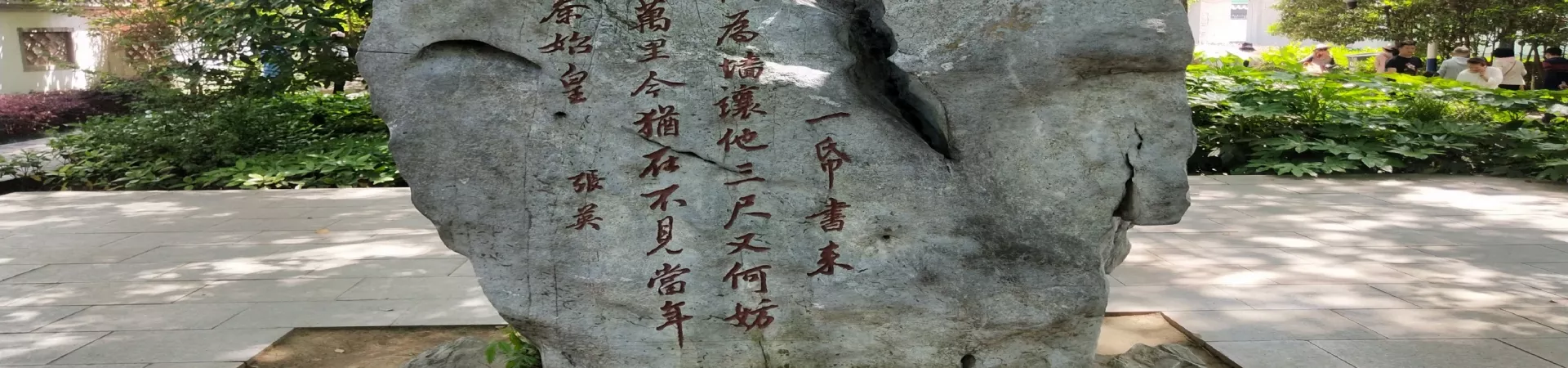
2.1. The Dispute and The "Wall Poem" A dispute arose when the Wu family encroached upon a strip of land belonging to the Zhangs. Rather than engaging in a bitter local feud, the Zhang family in Tongcheng wrote a letter to Zhang Ying in the capital, seeking his support to assert their property rights. In response, the wise official did not leverage his power. Instead, he sent back a famous poem, which has since become intrinsically linked to the lane:
"A letter travels a thousand miles just for a wall; Why not yield three feet to them after all? The Great Wall stretches ten thousand miles still, But not to be seen is Emperor Qin Shihuang."
This profound verse reframed the conflict. It questioned the futility of clinging to a small piece of land in the face of life's impermanence, using the metaphor of the mighty Great Wall, which still stands, while the emperor who built it is long gone.
2.2. The Act of Grace and The Birth of "Six Feet" Moved by the poem's message, the Zhang family voluntarily retreated their wall by three feet. Witnessing this graceful act, the Wu family, touched and ashamed, reciprocated by also moving their wall back three feet. The space between them thus widened to six feet, creating the peaceful, shared passageway known today as Liuchi Lane. This mutual concession transformed a point of contention into a public good and a lasting symbol.
3. The Lane Today: Symbolism and Recognition The essence of this story is permanently etched into the site itself. At both ends of the lane stand stone gateways (pailou), each inscribed with the large Chinese characters "礼让" (Lì Ràng), meaning "Courtesy and Concession." These gateways serve not merely as entrances but as portals into the philosophy the lane embodies.
3.1. A Modern Symbol for Harmony The lane's relevance has transcended its local origins. On November 21, 2006, during a visit, then-State Councilor Tang Jiaxuan inscribed the words: "Tongcheng's Liuchi Lane promotes the fame of a harmonious city." This endorsement highlighted the lane's value as a cultural symbol for promoting social harmony and civilized behavior in contemporary China.
3.2. Official Status and Visitor Experience In April 2007, the site, grouped with the Tongcheng Confucian Temple, was officially designated as a National AAA-level Tourist Attraction. This status acknowledges its well-preserved historical and cultural value. For the visitor, a trip to Liuchi Lane is a brief but impactful journey. The recommended visit duration is under an hour—time enough to walk its short length, reflect on the story, and absorb the atmosphere of quiet dignity. The lane is open to the public 24 hours a day, year-round, allowing for contemplation at any time. Admission details are best confirmed directly with the scenic area, as policies may vary.
4. Practical Information for Visitors For those planning a visit, the lane is accessible via public bus route 635. Its location in Tongcheng, a city renowned as a center of classical Chinese scholarship and the Tongcheng School of prose, allows for a richer cultural itinerary. Visitors can combine a walk through Liuchi Lane with a tour of the nearby Tongcheng Confucian Temple, deepening their understanding of the region's historical emphasis on ethics, literature, and propriety.
While no physical remnants of the original Zhang or Wu family walls remain, the lane itself is the monument. It is a tangible lesson in conflict resolution, demonstrating that the highest form of strength often lies in graceful yielding and that the most enduring legacies are built not on disputes over territory, but on foundations of mutual respect and neighborly love. Walking through Liuchi Lane is to tread a path paved with wisdom, where every step is a reminder of the power of kindness over conflict.